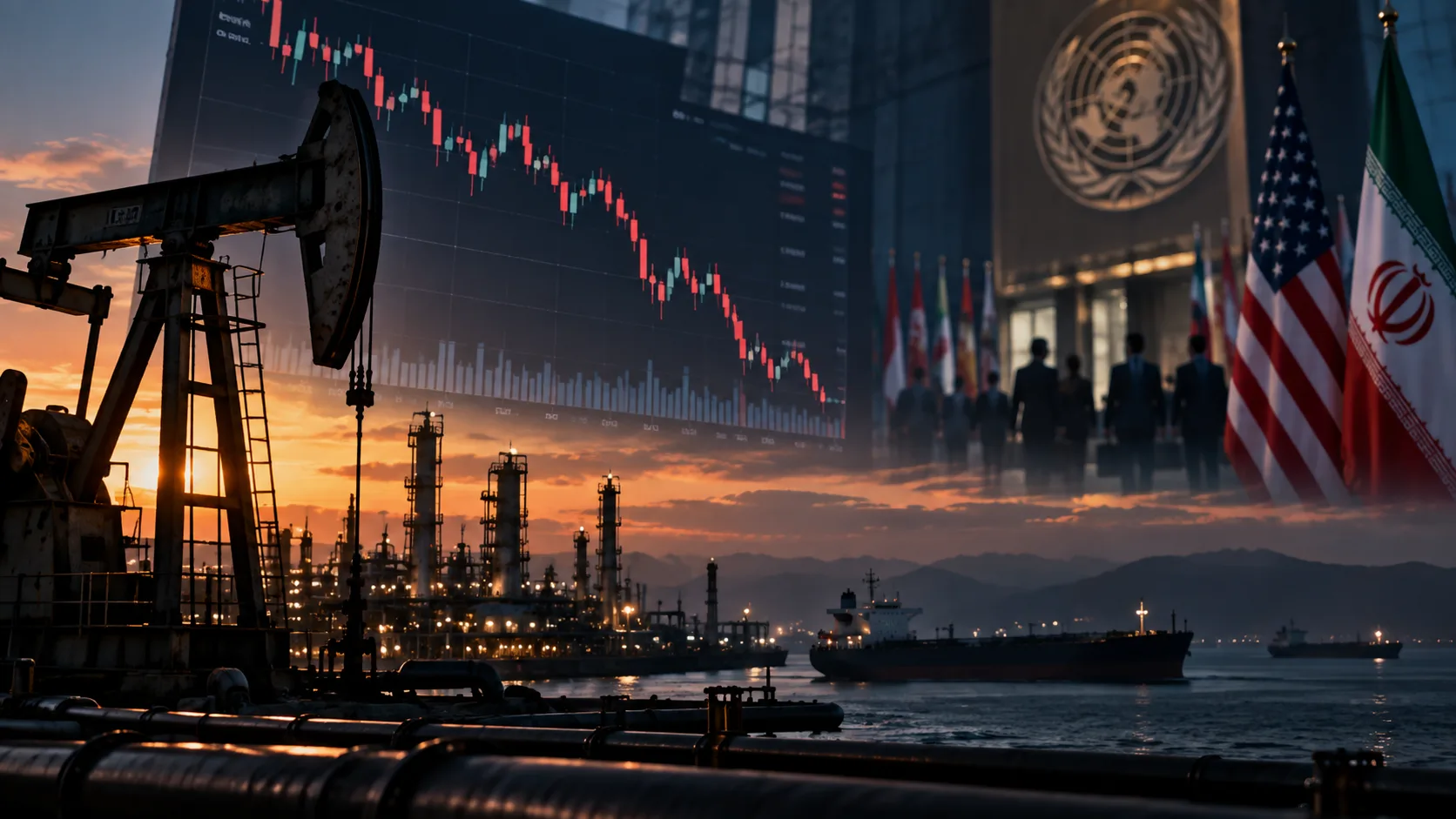
Oil prices extended their decline on Wednesday as investors weighed improving crude supply from the Gulf against signs that the United States and Iran may be moving toward renewed diplomatic engagement.
Brent crude fell to around $98.47 a barrel, while West Texas Intermediate slipped to about $89.31, according to Reuters data early Wednesday. Both benchmarks have been under pressure as supply concerns eased and traders reduced part of the geopolitical risk premium that had built up around the Middle East.
US-Iran Talks Add Pressure to Oil Prices
US President Donald Trump said on Tuesday that discussions with Iran were continuing and that he believed a settlement could eventually be reached.
Speaking on the sidelines of the United Nations General Assembly in New York, Trump said Iranian officials had been in contact with the US that day, while reiterating Washington’s opposition to Iran obtaining a nuclear weapon.
The comments added to market expectations that diplomacy could reduce the risk of further disruption to energy flows from the Middle East.
Iran Signals Willingness to Reopen Strait of Hormuz
One of the most important developments for the oil market came from Iran.
A senior Iranian official told Reuters that Tehran could reopen the Strait of Hormuz within seven days if the United States reduces military pressure and lifts its blockade on Iranian ports. Iran also said its delegation at the UN General Assembly had authority to pursue diplomatic talks.
The Strait of Hormuz is one of the world’s most important energy chokepoints. Before the latest conflict, roughly one-fifth of global oil and liquefied natural gas supplies moved through the waterway.
Any sustained reopening would therefore have a significant impact on global supply expectations.
Saudi Arabia Restarts Key Oil Pipeline
Diplomatic hopes are not the only reason oil prices are falling.
Saudi Arabia has restarted operations at its East-West Pipeline, which allows crude to move toward the Red Sea and bypass the Strait of Hormuz.
Reuters reported that the pipeline can reroute around 4 million barrels per day, although full capacity may take several weeks to restore following damage from earlier attacks.
Saudi oil shipments through Hormuz have also increased in recent days, adding further confidence that more supply could reach the global market.
Brent Falls Below $100
Brent crude settled below the psychologically important $100-per-barrel level on Tuesday for the first time since early September.
The November Brent contract settled at $99.25, down 1.09%, while the October WTI contract closed at $94.99, down 1.24%. Both contracts had fallen by more than $2 at their session lows before recovering part of the decline.
Oil extended those losses on Wednesday, with Brent falling further below $99 and WTI trading near $89.
Why Oil Is Falling
The current move reflects several factors happening at the same time:
expectations of increased Middle East crude supply
Saudi Arabia restarting its East-West Pipeline
higher Saudi shipments through the Strait of Hormuz
Iran signalling possible reopening of the waterway
renewed US-Iran diplomatic discussions
Together, those developments have reduced some of the supply risk that previously supported higher oil prices.
Risks Have Not Disappeared
Despite the recent decline, the market remains vulnerable to sudden geopolitical shocks.
Reuters noted that vessel traffic through the Strait of Hormuz remains below normal levels, while recent attacks on commercial vessels have kept security risks elevated.
Trump has also maintained a hard line toward Iran even while saying talks are continuing, meaning diplomacy and military pressure are still developing in parallel.
That makes oil highly sensitive to new headlines from New York and the Middle East.
What Traders Should Watch Next
The most important signal for oil traders is whether supply conditions continue to improve.
A sustained reopening of Hormuz, rising Saudi exports and progress in US-Iran diplomacy could remove more geopolitical premium from crude prices.
On the other hand, renewed military escalation or fresh disruption to tanker traffic could quickly push that premium back into the market.
For now, the direction of oil remains heavily tied to Hormuz shipping flows, Saudi output and the next phase of US-Iran talks