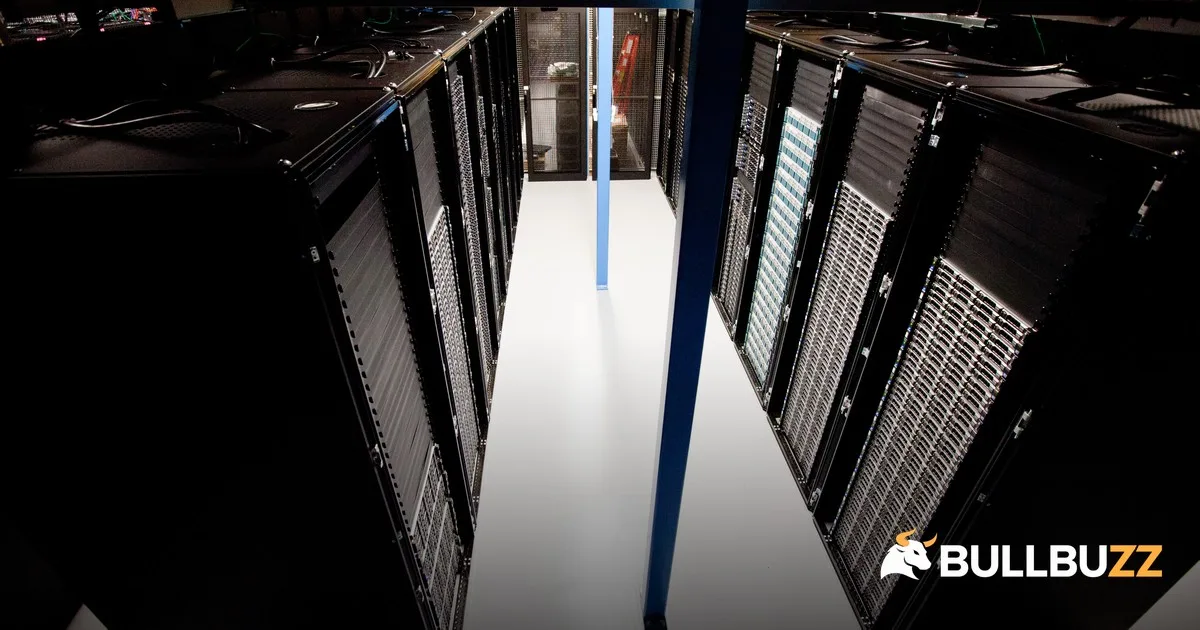
The AI buildout is running into the bond market. With the 10-year Treasury yield near 5.17 percent, its highest since 2007, the debt-funded race to build data centers is about to get materially more expensive, and lenders are starting to pick their spots.
JPMorgan estimated in June that $4.1 trillion in AI-related debt will be issued through 2030 as data center operators and hyperscalers scramble to meet demand for compute. Borrowers returning to the market now face a benchmark rate up about a full percentage point since January, forcing them to offer fatter returns to pull investors in, CNBC reported.
Related reading: Tengku Hassanal to invest US$552,500 in AI firm Sagtec Global; China and US agree $30B tariff cut plus AI dialogue as Xi visit ends.
Two stocks, two verdicts
The market is already sorting winners from the stretched. Debt-heavy neocloud CoreWeave rose almost 8 percent this week, while Oracle, which has leaned on debt markets for its AI expansion, fell 7 percent on the week and sits about 30 percent lower this year. CoreWeave warned in its latest quarterly filing that every 100-basis-point rate rise adds $30 million to its interest bill on floating-rate debt.
Japan's SoftBank, a major AI funder, raised $11.1 billion in a junk-bond sale carrying yields of nearly 10 percent, a sign of what riskier AI-linked borrowers must now pay, Bloomberg reported.
Lenders get picky
Riley Thompson of Mitsubishi HC Capital America told CNBC that lenders are growing choosier about which projects they fund even when borrowers accept higher rates. A senior private credit investor added that future neocloud deals will be harder to finance because operators have less cushion to absorb costs.
Not everyone expects a pause. KBRA's Andrew Giudici sees large issuance continuing, and American Compute CEO Bernie Margulies put it bluntly: "If you have a deal with Anthropic, will 50 basis points really stop you?" Goldman Sachs data via Reuters projects hyperscalers alone will borrow a record $420 billion in 2027, up 60 percent from this year, with Amazon already paying extra spread on its $25 billion July sale, YourNews reported.
Why Malaysia should care
A 5.2 percent 10-year Treasury is a headwind far beyond Silicon Valley. Higher US yields support the dollar and drain appetite for emerging-market risk, which feeds straight into the ringgit's footing around 4.07 and the cost of capital for Malaysia's own datacenter ambitions. Every extra basis point in Washington is a tax on risk assets in Kuala Lumpur.
What to watch
- Monday issuance: any new AI-linked bond deal will show what spread the market now demands
- Oracle vs CoreWeave: the market's live referendum on which AI debt loads are sustainable
- The 10-year: 5.17 percent and climbing; each tick reprices $4.1 trillion of planned borrowing
- Hyperscaler capex: Microsoft, Meta and Amazon earnings will confirm whether the buildout blinks